Compaction in Focus: What the Proctor Test and Core Cutter Method Have in Common
Adequate soil compaction is a key requirement for the load-bearing capacity and long-term durability of structures. But how can we ensure that a soil has actually been compacted properly? This is where two established geotechnical testing methods come into play: the Proctor test in the laboratory and field density determination using the core cutter method.
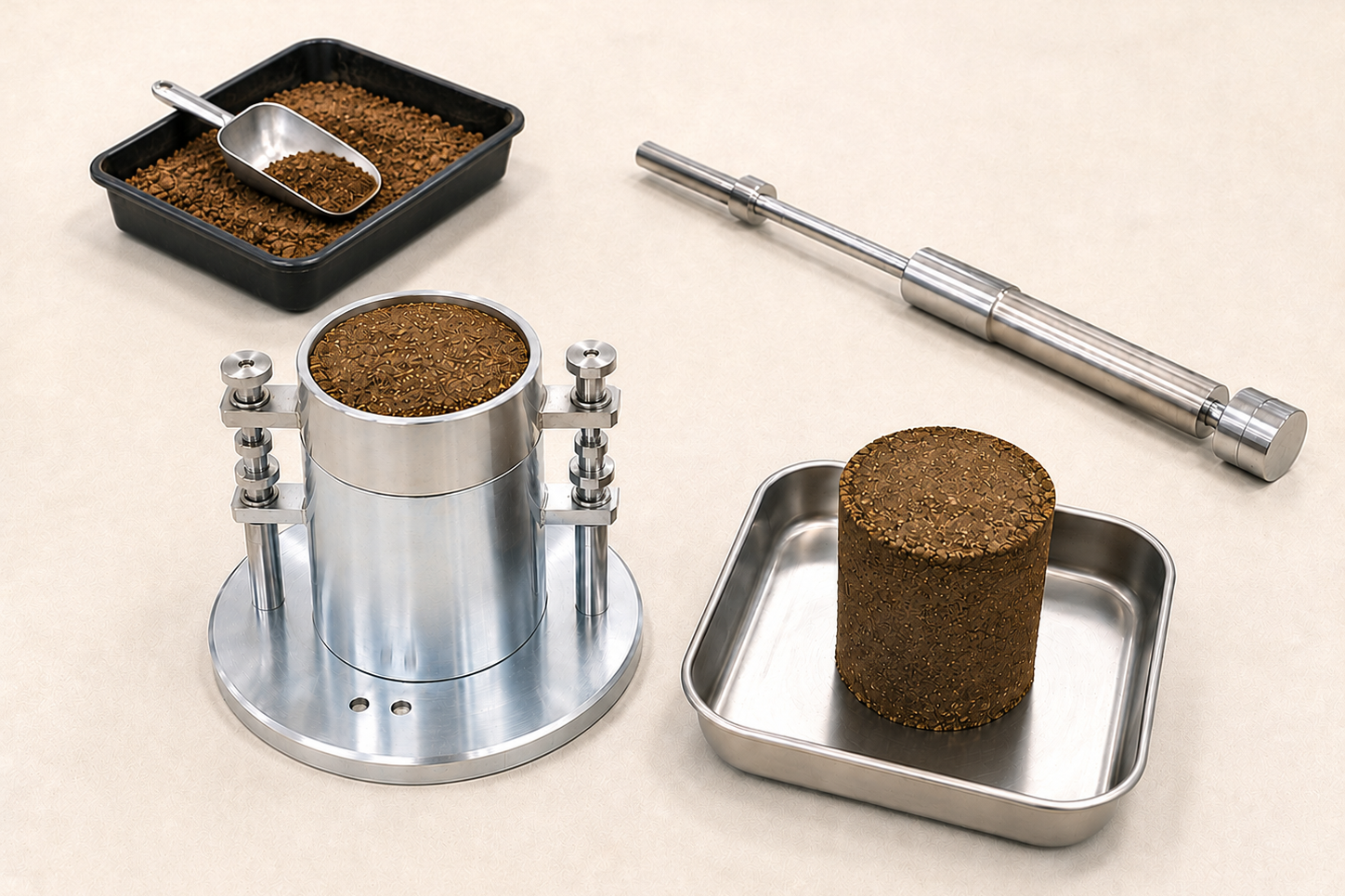
The Proctor test is used to determine the optimum compaction characteristics of a soil. In the laboratory, the soil is compacted at different moisture contents to determine the Proctor density and the optimum moisture content. The result is a reference curve showing the moisture content at which the maximum dry density is achieved – in other words, the condition under which the soil can be compacted most effectively.
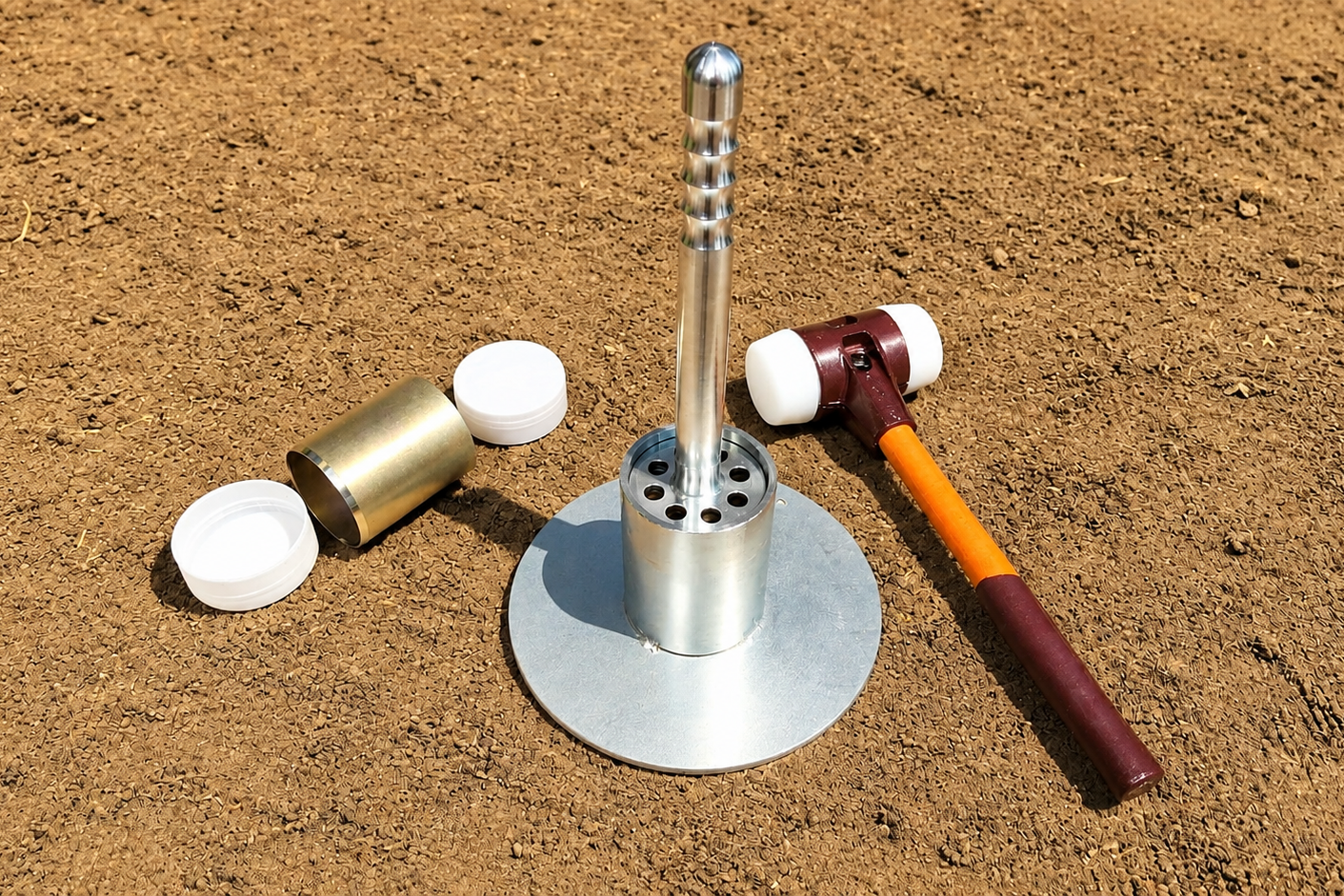
However, these laboratory values alone are not sufficient. On the construction site, it is necessary to verify whether the soil layer that has actually been placed and compacted meets the specified requirements. This is where the core cuttercomes into play.
Using the core cutter, a soil sample is taken directly on site. Since the volume of the cylinder and the mass of the sample are known, the in-situ dry density can be determined. This value is then compared with the maximum dry density determined by the Proctor test.
The interaction between the two methods is crucial:
- The Proctor test provides the target condition (maximum dry density at optimum moisture content).
- The core cutter method determines the actual condition on the construction site.
The ratio between these two values gives the degree of compaction. This indicates how effectively the soil has actually been compacted. Typical requirements may specify, for example, a degree of compaction of 95% or more of the Proctor density.
Conclusion:
The Proctor test and the core cutter method are not competing methods, but complementary procedures. Only by combining both methods can soil compaction be reliably assessed – from the laboratory to the construction site.