Practical Application: Backfilling of Amprion Power Transmission Routes with Flowable Fill
ELE Consulting Engineers from Essen Monitor the Production and Quality of the Flowable Construction Material
Flowable fill offers several advantages over conventional backfill materials when installing underground structures. Flowable fill consists of excavated soil, water and special mineral binders, creating a flowable, self-compacting construction material.
It is used in civil engineering and utility construction, among other applications, to fill excavations or utility trenches without leaving voids. The material can withstand loads quickly without requiring mechanical compaction.
This innovative method also conserves resources, as the excavated soil is processed on site and reused.
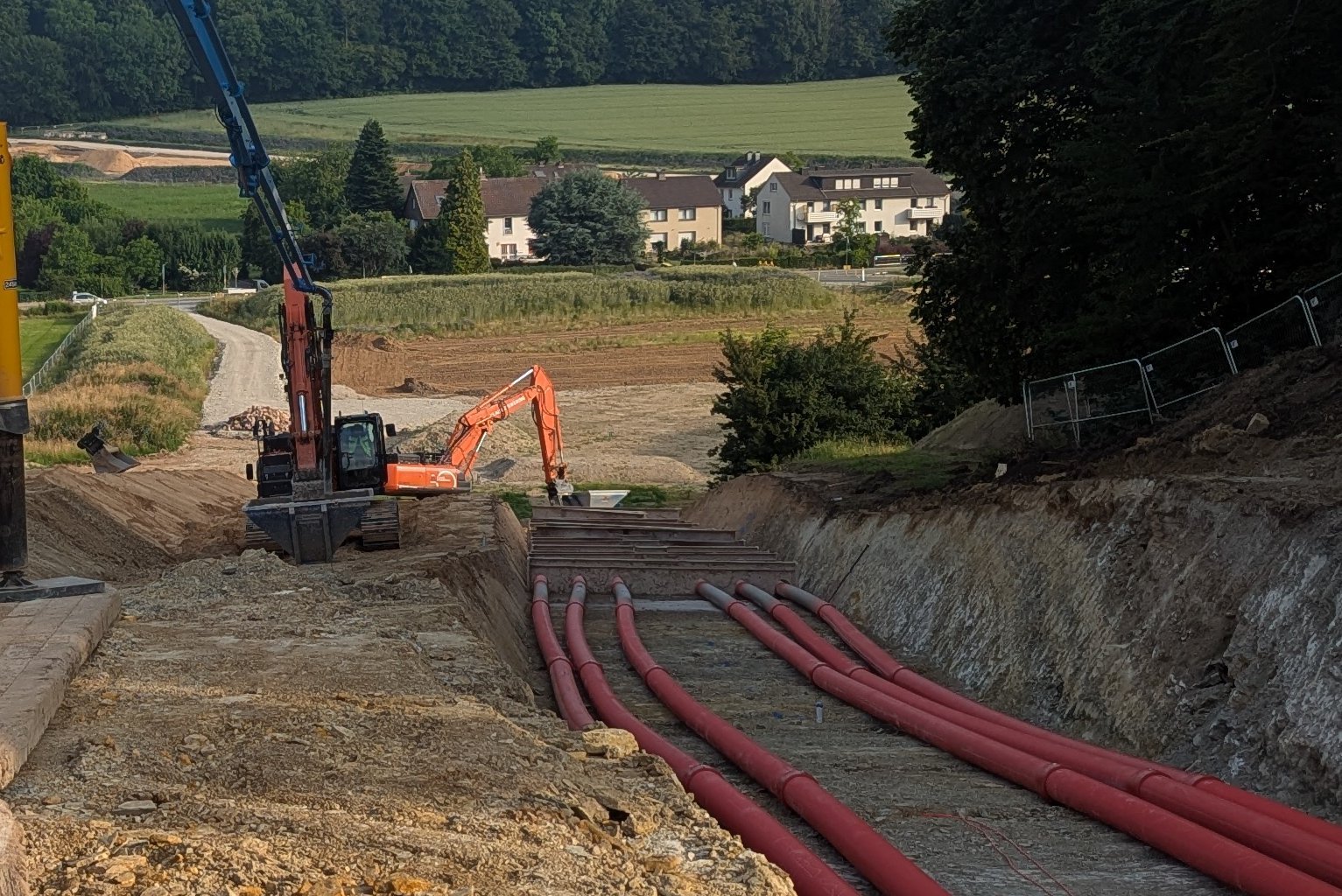
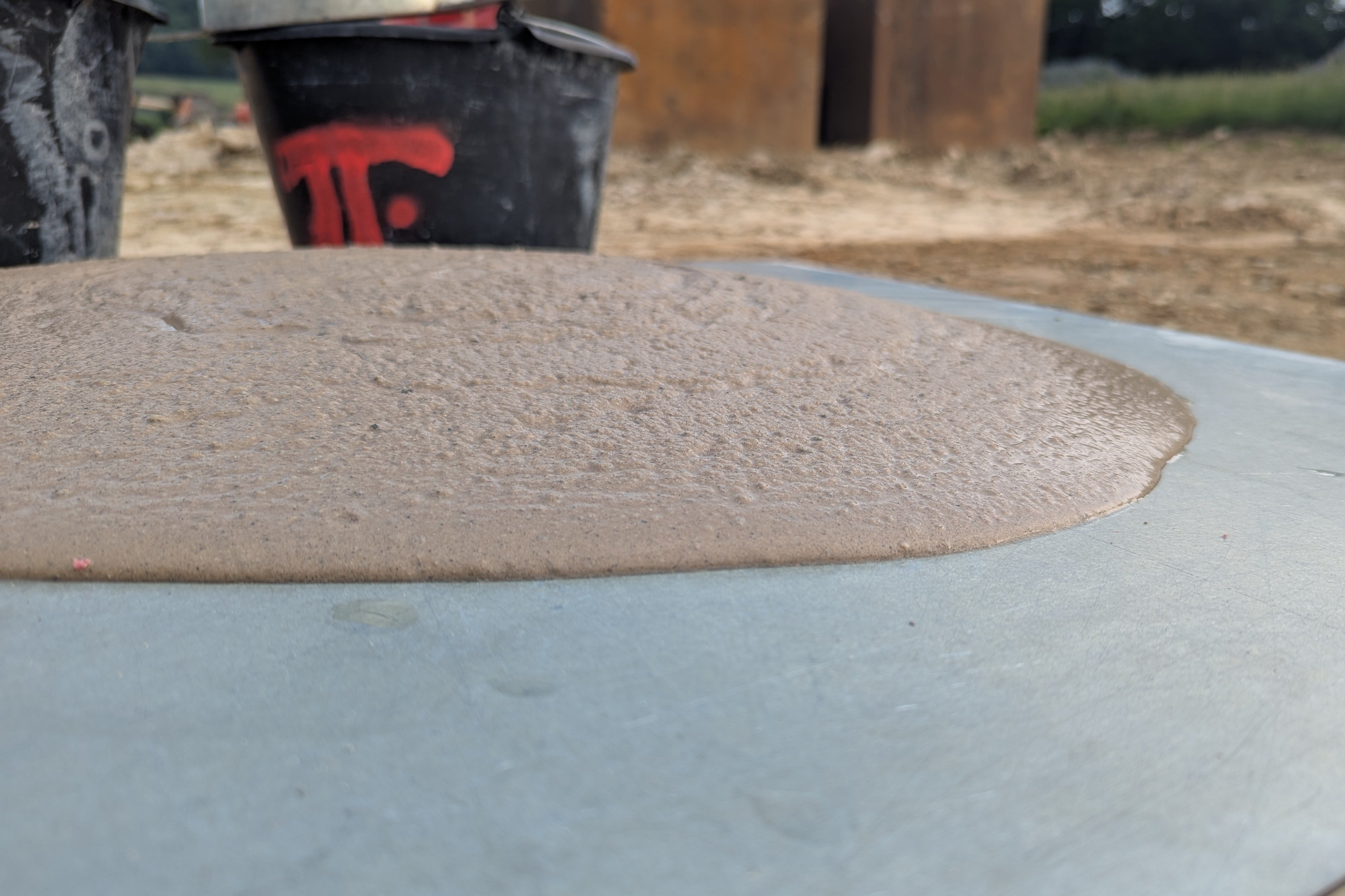
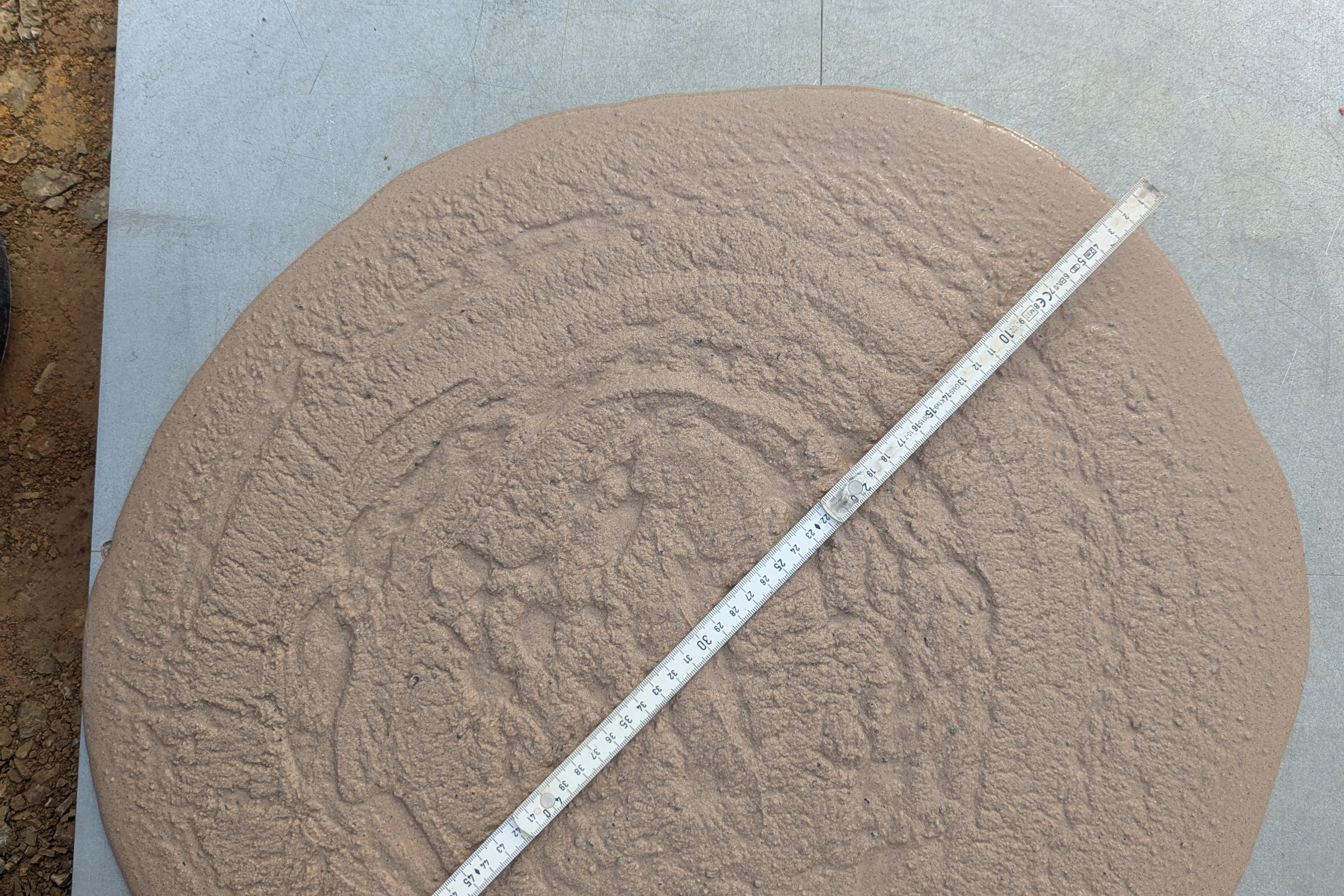
ELE Beratende Ingenieure GmbH was founded in 1950 as Erdbaulaboratorium Essen (ELE) and today focuses primarily on geotechnical site investigations. With the increasing use of flowable fill as an alternative to backfilling with sand or gravel, ELE has specialised in the sampling and analysis of this innovative construction material. This is particularly important because the use of flowable fill can also have disadvantages and involve risks if the material is incorrectly formulated or improperly applied.
One of the key objectives is to achieve the correct strength of the flowable fill so that it can quickly be walked on and built over, while still allowing it to be excavated again at a later stage. To avoid errors and achieve the optimum mix design using additives such as cement or bentonite and the correct water content, precise knowledge of the properties of the original soil is essential.
Since 2019, ELE has been involved in the construction of various power transmission routes for the transmission system operator Amprion. The power lines are designed to transport electricity generated by wind power from northern to southern Germany and are installed predominantly underground. The cable zones within the trenches are largely backfilled with flowable fill produced directly on site.
Although flowable fill is more expensive than conventional backfilling with gravel or sand, it eliminates the need for mechanical compaction, prevents voids, provides volume stability and reduces the risk of damage to power cables caused by heat and deformation.
ELE regularly takes samples of excavated soil along construction sections measuring approximately 2 to 3 km in length, analyses the material to determine its suitability for producing flowable fill and also tests the finished flowable fill. As the transmission routes pass through different geological and terrain conditions, the existing soil may not always be suitable for producing flowable fill or may require specific additives.
If a route passes through areas with highly cohesive soils, such as loam with a fine-grained content of more than 20%, the resulting flowable fill can retain a large amount of water. This may subsequently lead to volume loss and deformation within both the cable zone and the trench backfill zone. Due to their high water content, cohesive soils can also result in delayed hardening or even prevent the material from hardening altogether. A high humus content in the soil can likewise cause delayed hardening or insufficient strength development.
If the soil is too cohesive, a supporting granular structure consisting of sand or gravel is required. Another important requirement for flowable fill used in utility construction is thermal conductivity. The thermal conductivity of the flowable fill can also be increased by adding quartz-rich materials such as sand.
Conclusion: Despite the higher production and material costs, the need to secure cable ducts against flotation and the increased logistical effort, the use of flowable fill can be economically viable if it provides high-quality backfilling in the cable zone and helps prevent subsequent damage to underground infrastructure. However, it is essential to test the soils used to determine their suitability for the production of flowable fill.
Contact
ELE Beratende Ingenieure GmbH – Erdbaulaboratorium Essen
Mr Robin Duszynski
Schnieringshof 14
45329 Essen
Germany
Tel.: +49 162 2914597
Email: robin.duszynski@ele-e.de
Website: www.ele-e.de
© Image rights: ELE Beratende Ingenieure GmbH